Wednesday, 5 February 2020

Well Hunting Day Two - 10 more Wells

A Short Afternoon at Cubbon Park:

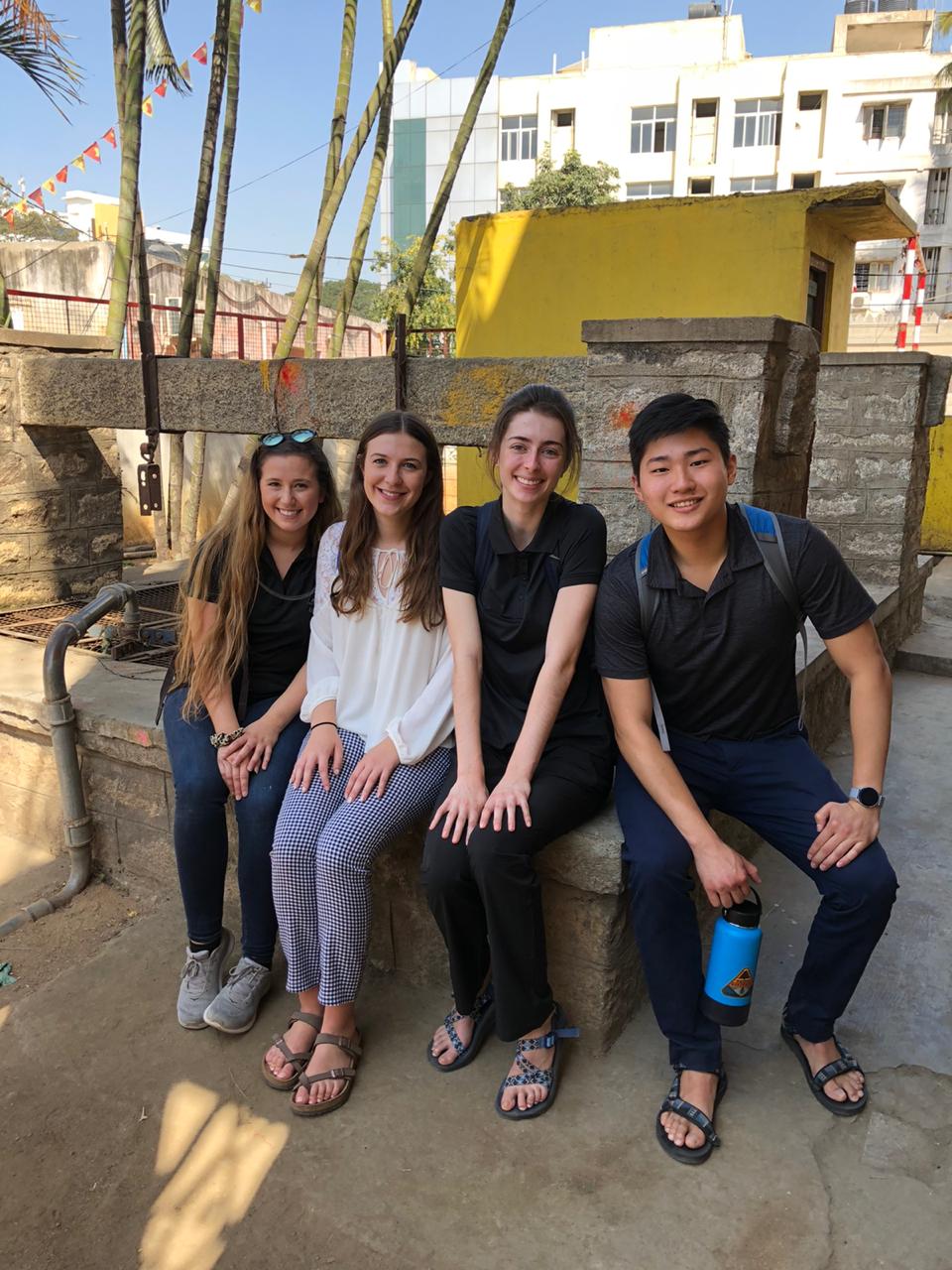
After yesterday's talk with Biome, in which we were advised to bring Manjunath with us to help show us where the wells are, which changed our entire experience. We were under the impression that he had managed the project, but it was clear he had spent a lot of time actually in the park because he knew the exact locations of all of the wells. In under an hour, we were able to mark out ten new wells, bringing our total up to 30 wells out of 70. We were lucky to have Manjunath for another reason, too: during our marking of well 29, a man sitting on the side of the well called out to us and asked us what we were doing. He was sitting with a group of other men, and seemed very entitled and stuck up. He repeatedly demanded to know who gave us permission, if we were working for the government, and where our documentation was. He didn't listen to our explanation that we were interning with Biome, and that we were marking out wells to build a cohesive map of the wells in Cubbon Park. We had to have Manjunath come over to mitigate, and he spent almost 15 minutes talking to this man. Upon talking to Uma and Manjunath after the fact, they told us that we shouldn't worry about being questioned this way, that this man just wanted to show off and act big. This is apparently common for Manjunath, and since he is officially permitted to work in the park, we were told that as long as he was there to guide us we would have no problem. It was an experience, an interaction that marked out an otherwise very productive afternoon in the park. We are looking forward to working with Manjuvath again tomorrow, and hopefully finishing marking out the rest of the wells so that we can move on to the report, presentation and poster!

-GCIL 2020 Interns (Veronique, Eric, Kayla, Tessa)


Tuesday, 4 February 2020

Well Hunting around Cubbon Park

On this lovely Tuesday morning, GCIL 2020 interns went well hunting - that is, we went looking for the 70 recharge wells around Cubbon park, which are used to replenish aquifers by letting the water which gets trapped in the top foot and a half of soil flow downwards through concrete rings and coarse aggregate. We decided to go today without a guide, and to let ourselves explore the park and find the wells on our own. We had another Biome intern, Dennis, who is studying for his masters in economics and came from Germany to work with Biome, with us for the morning. He met us at our campus, and we all ubered to Cubbon Park, then walked to find paint with which to mark the wells. We decided on a nice, colorful blue, which would stand out and last on the concrete.

When we started going about the park, we quickly realized how big Cubbon Park is. We decided to start with the perimeter of the area we were in, and work our way into the park. To mark the wells, we used Google My Maps, which allows you to build your own map. We titled each well on My Maps R#, to indicate that they were recharge wells. Therefore, we can also come back and mark out the open wells if needed. We were able to mark out 20 of the 70 wells.

We had a couple of reflections as we were moving throughout the park. One, was that a guide who was a bit more familiar with the look of the wells and the general area in which there were more or less of them would be extremely useful. Second, we learned how to maximize the tasks at hand as a team. While we began by all walking together, by the end we were spread out walking in a line, calling to each other when we found a well. It was very difficult to know whether or not we missed a well, as some areas on our map definitely looked much emptier than others. We hypothesized that this could be due to the variable soil and depth of the aquifers below. The shallower the aquifers, and the greater their presence, the more wells should be in that area. We also learned that using Google Maps, and simply copy and pasting the coordinates onto Google My Maps, was easier and more accurate then just relying on the Google My Maps, which did not track our location very well.

We had a meeting in the afternoon with Biome to discuss projects which we would be working on during the rest of our time here. We decided that finishing the Cubbon Park project would be top priority, followed by the repair reports on the government schools around Bangalore, and creating new proposals for new schools to implement rainwater harvesting systems.

As usual, another productive, education, and fun day with Biome! So excited to continue this work and continue to build our skills and the projects.

-Team Biome


Thursday, 30 January 2020

Government Schools around Bangalore

The GCIL 2020 team had the opportunity to visit ten government schools around Bangalore today, and assess the repairs needed on each of the rainwater harvesting systems implemented. We visited Arasenahalli Higher Primary School, Urdu Higher Primary and High Schools, Rajiv Nagar Higher Primary School, Government Higher Primary School Vijayapura (East Kannada School), Government Lower Primary School Hunsur, Government Higher Primary School Gangawara, Government Lower Primary School Gopalapuram, Government High School Kadusonnapanahalli, and Government Primary School Kannur. There were three types of filters implemented at these schools: the basic rainwater filter, the reverse osmosis filter, and the commercial filter. I will further elaborate on these different types of filters, their uses, and the issues we found when viewing them.

The conventional jelly filter was set up in the same way at every school which used one: from bottom to top, a 40 mm jelly (gravel sized), then mesh, then charcoal, then mesh, then 20 mm jelly, and a final mesh layer. The filters have a pipe at the bottom which leads to a sump tank, where the water is stored. These sump tanks often have pipes to pump up to storage tanks on the roof of buildings, which are used for gravity uses in those specific buildings (i.e, a storage tank on top of the pre-school building is used for washing in that building only). These filters must be cleaned out every month during the rainy season, and only the top layer must be maintained during the dry season. These filters require a first rain outflow pipe, which allows the dirtiest water during a rain episode to flow out of the system, leaving only the cleaner water to be filtered and used. There was one school, Urdu Higher Primary and High Schools, whose filters did not have a first rain separator on either of their tanks; this is one of the additions which needs to be done at this school. The water from this filter was used for hand washing, for toilets, and for gardening and watering the trees. Many of the schools with this filter type also have municipal water connections, which often flow into the same sump tank. In kitchens, there is a smaller tap which only uses municipal water, as this is cleaner water. During the rainy season, there is a gate valve which can be turned to block off the municipal water access to the sump tank (not the kitchen taps), to decrease municipal water demand.

Most of the schools had the conventional jelly filter, but at the Urdu Higher Primary and High Schools, their filters were bowl shaped, included in the tanks rather than having pipes leading into the filter system. Another type of system, which was used by two schools, was the reverse osmosis filter. This system uses a semi permeable membrane to remove unwanted ions, large particles, and molecules from the water. In order to clean the water, a pressure is applied to pull the water through the membrane. This way, the unwanted particles remain on the pressurized part of filter, while the cleaned water flows to the other side. Like the jelly filters, the water that passes through this filter is not used as drinking water. For the two schools, they used the filters to water the trees and plants on their campuses, as well as for washing stations. A problem that we noticed with the reverse osmosis filters is that they waste a lot of water. Because of this, at Government Lower Primary School Hunsur, they only use the reverse osmosis system for watering trees, and have a jelly filter for their other uses at the school.

The final filtration system we encountered was the commercial filter. Unfortunately, this school was closed by the time we got there, and we were not able to closely examine it or ask questions. Basically, this is a filter that is commercially available, meaning it was bought at a store and is being used. This filter was used at the Government Primary School Kannur. Another challenge we faced at this school was that there was construction being done at this school, so the filter cleaning was put off because all of the pipes will have to be replaced when the construction is done.

This blog post is long because our day was long, but it was incredibly productive and as a team we learned so much. We missed our teammate Eric, who had a stomach bug and was missing, but teaching and telling him what he missed only provided an additional learning opportunity. The ingenuity and effort put in by both Biome and by the schools in creating and maintaining these systems was very inspiring. It was also encouraging, and rewarding, to see the dedication of Manjunath, the plumber, and his knowledge of each school

We hope to go back to continue building the relationship with the teachers and students at these schools, who benefit from these systems every day, in order to best build proposals for more schools around the city.

-Veronique (GCIL 2020, with Eric, Kayla and Tessa)


Wednesday, 29 January 2020

A Day Spent with Wells

On Monday, January 27th, the GCIL 2020 Biome Interns had the chance to go see a 100 year old well near the Adugodi Police Station, off of Hosur Road. There, we met Narayan and his brother, two well diggers who are in charge of maintaining wells in this area. A Facebook post posted by Shubha shows some videos and pictures of this well, as well as contact information:
https://www.facebook.com/shubha.ramachandran/posts/10158128650392425

We knew about Well Connected, Biome's well building and digging project which GCIL interns worked on last year, and had seen the Cubbon Park mural, but this was the first time we saw a well in person. The well itself is 80 feet deep, but during the dry season there can be as little as 20 feet of water. It provides water to some couple of hundreds of people in the area. This well was not in the condition that it is in today not so long ago, as it hadn't been maintained. It had "silted over", that is, there was such a deep layer of silt that water could no longer be pulled through. It was brought back to life by order of a legislative member, who saw the worth of having a working well next to the festival at the Sri Venugopal temple, which happens on February 1st.

This is where Narayan and his brother come in. They were hired to pull all of the silt out of the well so it could be used again. When we asked them how they learned this skill, they said that it was passed down from their fathers, who learned from their fathers - but they do not want to pass on this trade to their own kids. Instead, they look for work so that their kids can be educated, and decide whether or not they want to continue. Therefore, Biome is working with the older generation of well diggers, providing them with work so that they can send their children to school.

We also learned about the problems that apply not only to this well, but to multiple other wells. The well no longer has the inflow it used to have, because sidewalks and roads have been raised so that surface runoff from the streets no longer flows into it. The wells are not maintained, so they do not provide the relief from the impermeable ground that is the city that they should.

As we learned, Biome wants to change this. Right now, Bangalore depends on the five pipes that bring water up a grade from the Kaveri River. Wells are an option which will help reduce this demand. We saw examples of this in Cubbon Park, one of Bangalore City's largest green spaces. There, they have seven open wells and recharge wells. These serve different purposes. The open wells are meant to store and collect water for future usages, and eventually feed shallow aquifers. The recharge wells are made up of concrete rings stacked on top of one another, with four open holes in the sides, and coarse aggregate stacked along the sides. These wells are meant to recharge aquifers and the groundwater table - by using coarse aggregate and adding rings with holes in them, a path of least resistance is created for the water. This means that water will flow through the ground, in the top foot of earth, and when it reaches the aggregate, it suddenly has a low pressure point for which to flow downwards. This allows the water, which usually remains trapped in the first foot of earth, to flow to deeper layers and into aquifers.

Wells can and should be a part of Bangalore's water crisis, and Biome is taking important steps to make this a reality.

-GCIL 2020 Biome


Tuesday, 28 January 2020

GCIL Biome 2020 in India - Intro!

Hello! For this first blog post from the GCIL 2020 Biome team, I thought I would provide a quick introduction and summary of what we've been up to with Biome since we arrived in Bangalore.

Our team is made up of myself, Veronique, as well as Eric, Kayla, and Tessa. We are all students from the University of Washington in Seattle, studying/working in Bangalore from January until the middle of March. Kayla is studying Environmental Studies, Tessa is completing a Masters of Science in Environmental Engineering, and Eric and I are both seniors in the Civil Engineering department.

Our first in person meet up with Biome was when we toured the Visvesvaraya Rain Water Harvesting Theme Park. This was our first introduction to the rainwater harvesting efforts being done in Bangalore. We also got to see the Cubbon Park Metro Station mural, which was done in collaboration with a local art college to display the history of water in Bangalore and the importance of well diggers. The variety and depth of involvement which Biome has in the city is even better in person than online or over Skype calls.

Yesterday, on Monday January 28th, we had our first day in person with Srivalli, who took us to meet with local well diggers and view a 100 year old open well near Adugodi Police Station off of Hosur road. We got to hear for the first time how these wells are maintained, who maintains them, and what well diggers think of their careers and what it means for future generations. Panchayat is the organization who is in charge of these wells, and they hire out the well diggers to maintain specific wells. As much as these well diggers are necessary, they themselves do not want their children to carry on with the tradition. We also got to see the Biome Environmental Solutions headquarters, learn how they make mud concrete, and talk about the water systems around Bangalore and goals for Biome. Again, the exposure that we received to how Bangalore's water is treated further reminded us of the reach of Biome's efforts.

Today, we had a chance to walk around Kaikondhralli Lake, where we saw the impacts of letting untreated sewage flow into these ecosystems. The color of the water, and the smells and types of birds around the lake are indicative of the state of the ecosystem. We also got the chance to sit in and contribute on a meeting at WIPRO, developing an updated version of the Sustainability & Water school program. It was a program we had never heard of, but one that we quickly got attached to. It combines education, competitive, creative thinking, and collaboration for a topic that is very important for students in India to know.

After only three days with Biome, we have already learned so much, and are looking forward to the next six weeks of working on some of the amazing projects they have started and have in progress. We are eager to continue learning, contributing, and building the work that Biome does for the city we are lucky enough to live in for three months.

-Veronique

Tuesday, 29 October 2019

Rain-water harvesting session-3 in Telugu Govt School


INTRODUCTION-

The session Started off with recap of last two sessions
It was asked if rain-water could be consumed for water. 'Yes' and 'No'.
Water quality was introduced. Various tests for the testing of water quality was introduced- Physical, chemical and bacterial impurities test.


Water quality test-

Physical impurities of water quality, colour and odour. Physical impurities can be removed by Normal filtration. When impurities cannot be determined by colour and odour, chemical indicator tests are done.
Chemical impurities test are fluoride, chlorine, nitrate. These cannot be determined by colour and odour. There are tests for TDS(total dissolved solids), fluoride, chloride and nitrate indicator tests. All these chemical substance are harmful to human body and hence have to be purified before consumption. RO plant can be used to filtrate chemical impurities.
Bacterial test - It is difficult to detect bacteria in water. There is only one test. The best solution to kill harmful bacteria in water is by boiling.
A water quality kit is been given to the school and were taught to them the way to perform these tests. The experiments were made by children.


TDS meter test - TDS meter indicates the amount of dissolved solids in water. More the dissolved solids, hard is the water, which means it is non-potable.
The meter should indicate less than 500 for human consumption. In telugu school, Borewell water showed 58, drinking water showed 32, rainwater showed 66. This is the simple and primary test.

Fluoride indicative test- If the fluoride content is in excess, the water color is generally yellow in color. However this test will allow to understand better. The solution is put into the water. If it turns pink, fluoride content is less. If it turns yellow, then fluoride content is in excess.
This test at school was done for borewell, drinking water and rainwater. All types of water turned pink in colour indicating less fluoride content.


Nitrate indicative test- Tablet like substance is added to the water. 1 tablet of nitrate a and nitrate b for 10ml of water. Dark pink indicates less nitrate. Light pink indicates excess of nitrate in water. This test at school was done for borewell, drinking water and rainwater. All types of water turned dark pink indicating less/no content of nitrate
If water with nitrate is consumed, there are health effects to it


Chlorine indicative test - The powder like substance is added to the 10 ml of water. First added to drinking water and then to borewell water. If it turns pink, then chlorine is in excess. If it remains colourless, the water has less or no chlorine content. In both the type, the water remained colourless.

Bacteria indicative test- Drinking water and rainwater is put in the tube which already has bacterial indicator stuck onto it. The water is left for 24 hours. If it turns bluish green in colour, it means there are harmful bacteria (for eg; cyanobacteria) in the water. Then it is safe to assume that water is potable.


This completes the water quality test. It was advised to children to test the water every 2 months.

Thursday, 3 October 2019

Rain-water harvesting session-2 in Telugu Govt School

It started off with revising on the Session 1. 
'Do you remember what happened last class?'
Children replied, 'water cycle', 'water demand' 
'What was the demand?'
'It was 3 lack liter demand for the year', they replied
'Now let's see how much of rain water is harvested.' 

Rainwater harvesting process-

The diagram on the board was explained to them- The rain water from the cloud that is fallen in the roof is collected through a pipe, then a valve which flushes the first flow which is filled with dirt, then the rest(clean water) is sent to filter, following to the sump. From there it is collected for different purposes. In your case, it is for washing and toilet purposes. 

Calculation-
The water obtained from rainwater harvesting was calculated. Calculations were involved by the students.
Roof area- 115sqm x 900mm of water considering Bangalore annual rain fall without run off. Considering 0.9 of the acquired water there is nearly 1 lack liter of water in roof top of the school.

With the rain water collected water, we can reduce our demand to 2 lack liter that is,
3,00,000 liter(demand) - 1,00,000 liter = 2,00,000

Children were then asked, 
'how the water in rainwater could be utilized?
In reference to the question the movie of importance of rain water was shown. The context of the movie was relatable to students. They thoroughly enjoyed and learnt about rainwater harvesting. 

On site RWH-
Later students were taken to the place to help them understand the existing infrastructure of rainwater harvesting in their school. We showed and explained about the first flush, filter and tank. The procedure of the water reaches the tank and utilization for washing and in bathroom was explained.

Finally, it was handed over to school to take care of this infrastructure.
Students were left with the question, 'How do you know the water is clean?